Childhood Vaccines: A Case Study in Epistemological Dissolution
This is part of a series of essays that examine the current epistemological crisis.
PART I: The Fauci Affair and Our Epistemological Crisis
PART II: A Theory of Epistemological Stasis and Crisis
PART III: How We Got Here: The Hollow Stasis
PART IV: The Long Dissolution
PART V: Childhood Vaccines: A Case Study in Epistemological Dissolution
PART VI: A Million Tiny Pieces: Descent into Epistemological Crisis
PART VII: The Postmodern Coup
The dissolution described in the preceding pages ran across every American institution at once, which makes it difficult to watch closely. So it is worth slowing down over a single domain and following it the whole way — from a stasis as confident as any in the history of medicine, through the seeds its own success planted, to a severance that was fully accomplished a decade before the pandemic and that explains, better than any other single history, why a large fraction of the country would not believe a word it was told in 2020.
There is hardly a more apt example of epistemological crisis in American life than childhood vaccines.
Say the word aloud in mixed company and watch what happens. You will elicit fervent opinion from every angle within about a sentence and a half, and almost none of it tentative. Someone will tell you the science is settled and the debate is over. Someone else will tell you that his nephew was fine until eighteen months. A third person will change the subject, because he has learned that this particular conversation costs friendships. It is very nearly impossible to raise the topic in good faith and have it stay a discussion; within a few exchanges it has become an argument, and within a few more it has become an argument about what kind of person you are.
The same is true in writing, only more so. Publish a paragraph containing the words in the wrong order and you will likely draw an automated label, a correction from a fact-checking partner, a throttled reach, or an outright removal — not for a claim you have made, but for the territory you have entered. The topic is one of a small number in modern life where the subject matter itself is treated as the offense.
Which raises the question we hope to answer here: Why should a matter of such obvious importance — the health of children, the workings of a public health apparatus that has arguably saved as many lives as any other human invention — be conducted at a temperature that makes ordinary reasoning impossible? Why is this the one medical question that cannot be discussed the way medical questions are discussed?
Part of the answer is precisely because it is so important. There is very little a person holds more fiercely than the safety of his own children, and a question that touches it does not stay abstract for long. Both sides of this argument are defending children — that is what makes it so bitter, and it is worth stating plainly at the outset, because the caricatures on offer are false in both directions. The pediatrician urging a parent not to delay is not a shill; He has seen what pertussis does to an infant. The mother asking why her son needs a hepatitis B vaccine on his first day of life is not a fool; She is doing what a parent is supposed to do. Neither has the option of being casual about it.
But the temperature alone does not explain the shape. Plenty of debates touch the subject matter and remain arguable. What makes this one different — and what the rest of this sidebar traces — is that the machinery for settling it was dismantled, piece by piece, over forty years: an audit channel closed by statute, a compensation system administered by the department that recommends the product, a question converted into a loyalty test, and a man destroyed by a tribunal a High Court later found unfit. What is left is a subject of the highest possible stakes and no remaining venue in which anyone can be shown to be wrong.
That is not a controversy. It is a crisis, and it is the clearest particular model we have of the larger one.
One of the Greatest Achievements
Throughout most of human existence, the ordinary condition of family life was that some of your children died. Smallpox alone is estimated to have killed on the order of three hundred million people in the twentieth century around the world, and it killed roughly three in ten of the people it infected, blinding and disfiguring a large share of the rest. Diphtheria closed a child’s throat. Pertussis killed infants by exhaustion. Measles killed by the thousand in ordinary years. Every graveyard in every American town holds a row of small stones, and every family knew what they were for.
And then, thanks to human ingenuity, we found a genuinely astonishing trick. Not a cure, and not a treatment — a deception. Show the immune system a version of the enemy it can beat, and it will remember the encounter and win the real fight before the fight begins. Variolation had been practiced in Asia and Africa for centuries; Jenner formalized it with cowpox in 1796; Pasteur extended the principle to rabies in 1885; the diphtheria antitoxin arrived in the 1890s and cut a child’s odds of dying from that disease by more than half within a decade.
Note what kind of knowledge this was in the terms of the epistemological model. It came up the two lower arrows and it was checkable by anyone. A parent did not have to trust an institution to know that the children who had been vaccinated against smallpox did not get the disease. He could look at his own street. The claim was enormous, it was verified by ordinary experience, and the institutions that carried it were reporting something true. That is a criteria layer functioning at its absolute best.
By the middle of the 20th century the enterprise had acquired a name and a mood: It was the ‘War on Microbes’, waged with antibiotics on one flank and vaccines on the other, and it was being won. And then came polio, which had terrorized American summers for a generation, closing pools and emptying theaters and putting children into iron lungs. When the Francis field trial results were announced on April 12, 1955, church bells rang across the country. Some cities held parades. Salk was asked who owned the patent and said there was none, which is the kind of answer a civilization celebrates.
Polio rates declined through the 1960s and ‘70s, and is considered eliminated in five of six regions of the world. Smallpox was declared eradicated in 1980 — the first and thus far only human disease ever removed from the earth. For that alone, it can be said that vaccination is one of humanity’s greatest achievements.
Success that Begets Failure
But an institution’s success tends toward its own dissolution. Vaccination is the clearest case in modern medicine, and the seeds are visible in the triumph itself.
The first seed was a proxy. The notion that vaccines save lives is true, magnificently true, and it is a claim about an aggregate. The claim a parent actually needs is different: This vaccine, at this dose, at this age, in this child, delivered alongside these others, is net beneficial. Those are not the same proposition, and evidence for the first is not evidence for the second. But the first is so overwhelmingly established, and so morally weighty, that it came to stand in for the second — which is proxy substitution exactly as described above, operating not on citations or credentials but on the entire moral standing of a field.
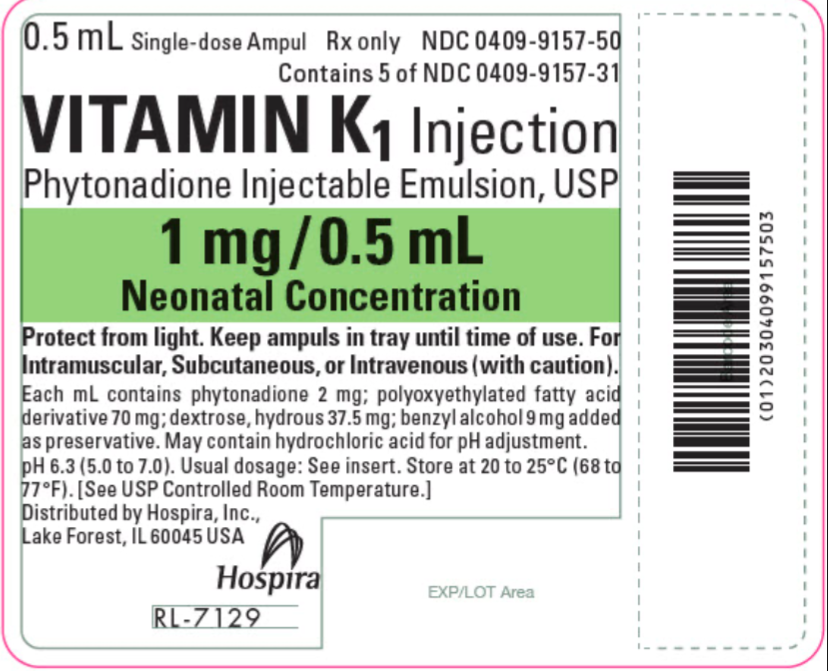
The second was carelessness about everything that was not the antigen. Enormous scrutiny went to whether a vaccine produced immunity, because that was the question the enterprise was built to answer. Comparatively little went to the rest of the vial — the adjuvants that provoke a stronger response, the preservatives that keep multi-dose vials sterile, the adjunct treatments, the residual media. These were not hidden; they were simply not the relevant question, and a research culture organized around one question does not staff the others. Even to this day, medical practitioners do not think much of the ‘inactive ingredients’. I asked a nurse who wanted to inject a ‘Vitamin K’ shot into my day-old baby what was in the shot. She said it was just Vitamin K, as if she were responding to a joke. In fact the package insert lists a synthetic form of the vitamin — phytonadione — suspended in a vehicle of polysorbate 80, propylene glycol, and other excipients, along with one ingredient the label says it ‘may contain’. None of that is sinister. What is telling is that the person holding the syringe could not have told me any of it, and did not think the question was a serious one.
The third seed was expansion. What began as targeted campaigns against catastrophic diseases became, over decades, a universal schedule administered to every child on a standard timetable — and then, increasingly, a condition of attending school. Each step was defensible and most were beneficial. But the cumulative shift is worth naming: An intervention available to a population became an intervention required of an individual, which changes the epistemic relationship entirely. A person who may decline is being persuaded. A person who may not decline is being controlled, and he is owed a different standard of candor.
And the fourth was hubris, which is where moralization enters. An intervention that saves millions of lives acquires a moral charge, and that charge attaches to the institution administering it. Questioning the schedule stopped being merely mistaken and became something closer to wicked — a person willing to risk other people’s children. Once that transition is made, the institution has acquired a defense that does not depend on evidence, and, as we have seen throughout, an institution in possession of such a defense will eventually use it.
For a long while the machinery handled its failures the way Stage One says it should. In November 1935 two research teams presented polio vaccines at the American Public Health Association meeting that they had already given to children — roughly ten thousand in one case — without adequate animal work and without controls. Six children died and ten were paralyzed. The profession’s reaction was immediate and public, polio vaccine research was set back some twenty years, and one of the two researchers was destroyed by it. That episode is why the Salk trial of 1954 was the largest and most rigorously controlled medical experiment ever conducted to that point. The field had learned. Which makes what follows harder rather than easier to explain.
Cutter was caught and the system was rebuilt. The whole-cell pertussis vaccine, which caused genuine neurological reactions at low rates, was eventually replaced with an acellular version. RotaShield, licensed in 1998, was withdrawn within a year after surveillance detected roughly one intussusception per ten thousand recipients — a signal so small it would convince even the most cynical individuals of how sensitive the system could be when it was looking.
But in 1976 came the affair that changed everything downstream. Fearing a repeat of 1918, the federal government mounted a mass immunization campaign against a swine flu pandemic that never arrived. A president went on television to urge every American to be vaccinated. Some forty-five million were, in ten weeks. Then, roughly 450 to 500 cases of Guillain-Barré syndrome appeared, with deaths variously reported at twenty-five or more, the program was suspended in December, and the government spent years litigating claims. The Institute of Medicine would later conclude that the evidence favors acceptance of a causal relationship between the 1976 vaccine and GBS in adults.
The program was stopped, which is a Stage One ending. But look at what a parent had now watched: The government had urged with maximum authority, the emergency had turned out not to exist, and people had been hurt by the remedy. The recommendation and the risk, it turned out, did not come from the same calculation.
The Foul-Up
Now a typical parent of the late ’90s and early aughts did not remember the swine flu affair of 1976 or the wave of litigation over the whole-cell pertussis vaccine that followed. But the incident created waves that carried over to 2000 and still do today. That is because the swine flu affair caused genuine distrust in government-led public health initiatives and spurred a crisis of supply. Juries were awarding damages, insurers were fleeing, prices were climbing, and, by the mid-1980s, only one American company was still making pertussis vaccine at all. Congress responded with the National Childhood Vaccine Injury Act, which Reagan signed in November 1986. Its stated purposes were exactly two: to compensate injured children more easily than the tort system could, and to eliminate the manufacturers’ liability so that vaccines would continue to be produced. Both were real problems, and the second was framed as a public health emergency.
But look at what the solution did to the machinery. Claims would now go to the Court of Federal Claims, where the respondent is the Secretary of Health and Human Services, the Justice Department appears for HHS, and special masters rule against a schedule of presumed injuries — a system funded by an excise tax on the vaccines themselves. The vaccine manufacturer no longer has to deal with the patients and no longer has a financial standing in the matter at all. Certainly, this allowed the manufacturers to focus on the production of their drugs, but it also removed a key feedback loop in the design process, as observed in Supreme Court Justice Sotomayor’s dissent of the 2011 case, Bruesewitz v. Wyeth.
The liberal order’s stasis had been built upon a central design principle: No custodian permitted to be the final judge of its own case, with adversarial audit as the mechanism that keeps an institution honest when its interests and its findings point the same way. Tort litigation is that mechanism. It is slow, expensive, and not infrequently unjust, and it is also the one venue in American life where an individual citizen can compel a corporation to produce its internal documents. It is how the asbestos papers surfaced. It is how the tobacco documents surfaced. It is how the world learned what the chemical companies knew about PFAS.
For vaccines, that channel was closed by statute. The argument for closing it was sensible, but nothing was built to replace what it had been doing incidentally, and the incidental function was not compensation. It was discovery. Moral hazard inevitably followed: A manufacturer immune from design-defect suits retains every incentive to make a vaccine that sells and considerably less to make one that’s safer.
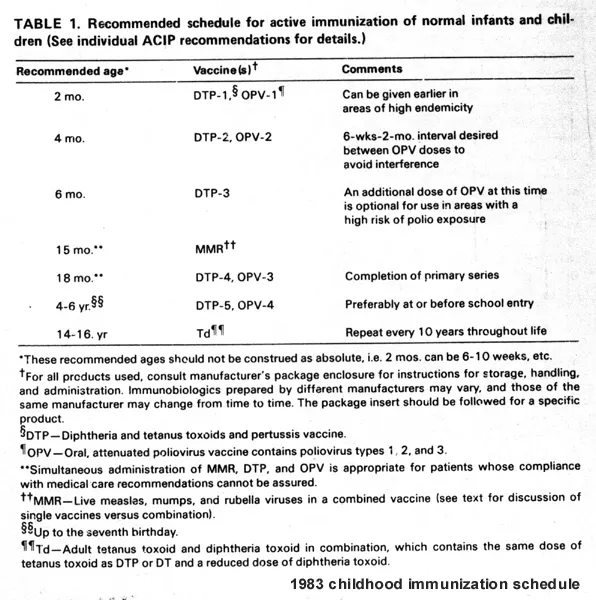
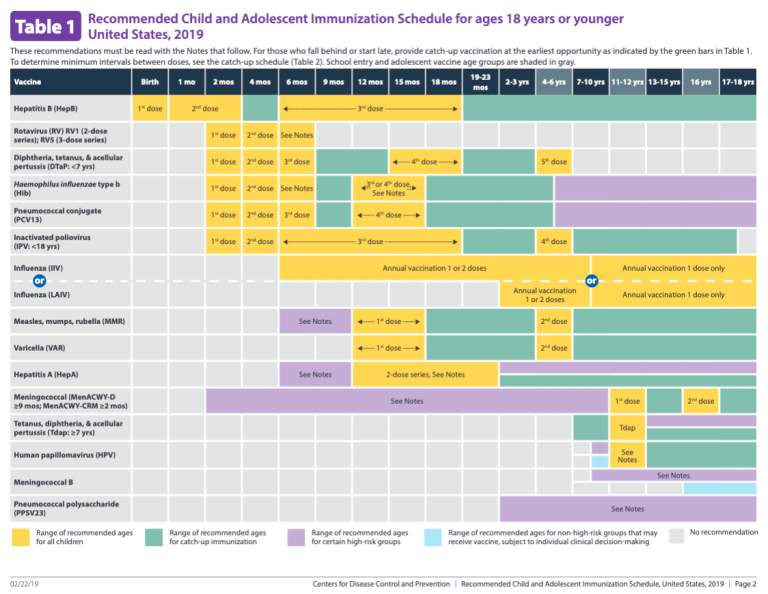
The sequel should have been expected: The childhood vaccine schedule ballooned. In the early 1980s the American childhood schedule consisted of a handful of vaccines and roughly a dozen doses. Then a rotavirus vaccine was added in 1998, a pneumococcal shot in 2000, an annual influenza recommendation extended through childhood over the following decade, and a meningococcal vaccine in 2005. By 2024 the schedule covered some twenty diseases, and — counting the annual flu dose and combination products separately — a child could receive on the order of seventy doses by age eighteen, with roughly thirty injections in the first two years of life. Each addition was individually reviewed and individually justified by the CDC, and some of them were declared triumphs due to the reduction in disease that followed. But note the structural fact: No one ever decided on the schedule as a whole. It accreted, one licensing decision at a time, and the aggregate was never the subject of any single deliberation that a parent could point to.
And then, in the middle of that expansion, the agencies did something that broke more trust than any single claim they ever made.
In 1997 Congress had required the FDA to review mercury content across drugs and biologics. When the arithmetic was run on the newly enlarged childhood schedule, it emerged that a fully vaccinated infant’s cumulative exposure to ethylmercury from thimerosal — a preservative used since the 1930s to keep multi-dose vials sterile — exceeded federal guidelines for methylmercury, a chemically distinct compound that the body handles differently. Nobody had done the addition before, because nobody had been looking at the schedule as a whole. It was the aggregate question, arriving by accident.
In July 1999 the Public Health Service and the American Academy of Pediatrics issued a joint statement calling for thimerosal to be removed from childhood vaccines as a precautionary measure — while stating, in the same document, that there was no evidence it had caused any harm. It was substantially gone from the childhood schedule by 2001.
Now consider how that lands on a parent, and note that no scientific dispute is required to see the problem. If it is safe, why remove it? If it is being removed, in what sense is it safe? The action and the assurance said opposite things, and the agencies never reconciled them — they simply issued both and moved on. That is the noble-lie reflex in its purest form: an institution telling the public one thing while doing another, for the public’s own good, and never explaining the gap.
After the schedule was increased, three things happened in American pediatric offices that no one disputes are real. First, autism diagnoses rose enormously — from roughly four or five cases per 10,000 children in surveys of the 1960s and 1970s, to one in 150 among children born in 1992, to one in 31 in the most recent federal records. Second, food allergies climbed to something near eight percent of children, with peanut allergy roughly tripling between the late 1990s and the late aughts. And, third, pediatric autoimmune and inflammatory conditions rose across the board.
The official explanation is diagnostic expansion, and it certainly accounts for some cases: Autism first entered the diagnostic manual in 1980, the criteria were broadened in 1987, Asperger’s and PDD-NOS were added in 1994, and autism became a funded special-education category in 1991. But it never explained the increased reporting of a suddenly common episode that was terrifying parents: A child developing normally, checks into a ‘well visit’ at 12 or 18 months, is given a round of shots, typically the MMR vaccine, suffers an adverse reaction with a high fever and rash, and then, when the fever breaks, the child stops speaking, stops meeting eyes, stops coming when called, and starts swaying uncontrollably and hitting his head against the floor, the crib, anything. This couldn’t be explained by expanded diagnosis. Something had gone wrong, and parents naturally scrambled for answers.
But doctors could not give them answers. When it happened to Polly and Jonathan Tommey and their son in 1998, they were told that their child’s seizure and fever was completely normal and that he would be okay. When he didn’t return to normal, they sought answers elsewhere. They published a magazine that asked questions in an attempt to crowd-source treatments and parenting techniques for this new disease, and their publication Autism File quickly gained tens of thousands of subscriptions. It was a genuine panic and the establishment didn’t seem to be providing any relief.
When in 2007 MTV personality Jenny McCarthy appeared on Larry King Live to talk about her son, she wasn’t pushing an agenda or pulling a publicity stunt. She was sharing a story that resonated with millions of parents around the world who had similar experiences or knew families who did. Her argument was not that vaccines were bad or that they caused autism. It was rather that the schedule had grown too large too fast, and that a child, perhaps predisposed for certain conditions, perhaps with exposure of other medications, could be harmed by the onslaught of injections. She argued that the shots should be spaced out, and that the total load should be returned to something nearer its pre-1989 level, a sensible and relatable recommendation and one that, in healthy epistemological stasis, would be absorbed into the institutional structure. But that is not what happened.
Enter Royal Free gastroenterologist Andrew Wakefield. He was not an autism researcher and had no standing in the field. But when parents began contacting him about children with severe gastrointestinal symptoms who had also lost developmental milestones as a part of what they were calling autism, he agreed to look.
The resulting 1998 paper in The Lancet was a twelve-child case series describing intestinal inflammation alongside developmental regression, and — importantly — it stated that no association with the vaccine had been proven and that more research had to be done. What detonated the scare was not the paper. It was the press conference Wakefield gave two days before publication, at which he recommended splitting the MMR into separate injections. That recommendation, paired with his soon-to-be-published paper on autism, provided enough proof of correlation for parents to see a cause. Suddenly, what many parents had intuited and doctors refused to acknowledge had been given an explanation. And it whipped up a frenzy.
But not in the Stage One or even Stage Two kind of way. What followed was not a standard scientific adjudication where claims were tested and experimented on and ultimately settled, but rather an all-out Stage Three-style effort to disgrace and censure a man for simply positing a hypothesis.
The Fallacies
In move after move, establishment institutions fought the new input, failing to respond to clear evidence from parents and from doctors like Wakefield, and attacking straw men instead of legitimate claims. The CDC were reactive, secretive about their own work, and, according to one of their own senior scientists, omitted an inconvenient subgroup finding from a published paper. Even if the vaccines are entirely safe, this is not the way to prove it to the masses. At every step of the process, the institutions had the opportunity to instill trust and absorb the upward flowing information, but did the opposite, leaving individual parents and unconventional doctors to draw their own conclusions. A short review of each step suffices to convey the issue:
The first move was substitution. The position being advanced by Wakefield and most skeptical parents was not that the MMR vaccine causes autism, but rather that there must have been some link between the vaccine shots they were giving their children and their children’s descent into the disease. But establishment scientists and media painted the argument as a straw man — that vaccines cause autism, specifically the MMR, and therefore no vaccines — and then refuted that argument with studies showing no link between the MMR and autism rates across the population, presenting those studies as having answered the parents. They had not. They had answered a different question, which is the oldest sophistry there is.
The MMR-autism hypothesis has been tested seriously: in Danish national registries covering every child in the country, in a meta-analysis spanning more than a million children, in an American study of children with autistic older siblings, and — most compellingly — in Japan, where the combined vaccine was withdrawn nationally in 1993 after aseptic meningitis was traced to one of its components, and a total-population study of one Yokohama ward found autism incidence continuing to rise in the cohorts born after no child received it at all. Those are independent systems, several with no stake whatever in American pharmaceutical revenue, and they converge. On the population-level MMR question, the hypothesis failed — and it failed on evidence that has nothing to do with Andrew Wakefield.
But observe exactly what they asked. They tested whether the MMR, or thimerosal, is associated with autism at the population level. They did not test the cumulative schedule. They did not test spacing. They were not designed to detect an effect confined to a small susceptible subgroup, for which a study powered to find population-level effects is the wrong instrument entirely. And no randomized trial of the full schedule against no schedule exists, or ever will, because randomizing children to no protection is not something an ethics board will approve — a fair answer, and one the institutions were oddly reluctant to give plainly, preferring the confidence that came with a settled question. So when the finding reached the public and experts and media claimed that science has proven vaccines do not cause autism, it was a motte-and-bailey fallacy — a narrow, well-supported claim standing in for a sweeping one it does not establish. The parents were not lied to. They were answered with a true sentence that did not address them.
The second move was the destruction of the man, and it should be examined rather than assumed, because it is almost universally reported as settled and is not. If you go to Wikipedia, you’ll learn that Andrew Wakefield is a “fraudster” and that he’s been “discredited”. The record is considerably more contested than that summary allows. It is true that Wakefield had received £435,643 from the Legal Services Commission to investigate MMR safety on behalf of parents already in litigation; that ten of the twelve children had legal aid backing to sue manufacturers; that there was a patent application; that there was blood taken from children at his son’s birthday party. Wakefield disputes the significance of these and has denied misconduct throughout. Investigative journalist Brian Deer’s further allegation that he altered the children’s symptom-onset timelines is contested and was never adjudicated by any court.
Now the part that almost never gets reported. Of the thirteen doctors who contributed to the Lancet paper, three were charged before the General Medical Council. One, Simon Murch, was cleared by the panel itself. A second, John Walker-Smith — the senior clinician on the paper and head of paediatric gastroenterology at the Royal Free — was struck off the registry alongside Wakefield on closely parallel charges, appealed, and in March 2012 had the entire finding quashed, or overturned, by the High Court. Mr. Justice Mitting found the panel’s reasoning inadequate, superficial, and in a number of instances simply wrong; noted that it had never determined the central question of whether the doctors were conducting research or treating sick children; and called for reform of GMC hearings, remarking that it would be a misfortune if this were to happen again. The GMC did not seek a rehearing. Wakefield never appealed — by his account, because his insurance would not cover the cost.
So, of three men charged on the same facts by the same tribunal, one was cleared, one’s erasure was quashed as inadequately reasoned, and one was left struck off without any court ever reviewing his case. That is not a verdict. It is a tribunal whose reasoning a High Court found unfit, applied unevenly, and then treated by the entire world as though it had settled a scientific question.
In epistemological stasis, that confusion would be considered a failure and corrected. But in a crisis, the confusion is leveraged to maintain the official narrative. The public was taught to treat a professional tribunal’s verdict on a man as though it had accomplished the work of scientific studies, and ultimately allowed any question about vaccines, however sensible, to be answered with ad hominem.
The third was fear in place of argument. When the appeal to science and authority didn’t persuade, pediatricians and newscasters employed scare tactics in attempt to convince parents to vaccinate their children, ringing alarms of measles outbreaks and the return of polio, and describing in vivid terms what happens to unvaccinated children who catch the diseases. The warnings were not false — measles kills, and pertussis in an infant is a horror. But a risk presented without its alternative is not testimony. It is propaganda. And a parent shown one side of a ledger by someone who wants a particular decision from him will sense he is being lied to. Outbreaks claimed to be due to the rise in unvaccinated children were covered exhaustively; ballooning vaccine injury claims paid by the government’s own program were covered almost not at all.
And through all of it, the thing never addressed was the thing the parents actually experienced. The autism figures were disputed but never explained. The allergy epidemic was acknowledged and left unaccounted for. The autoimmune rise was noted and set aside. A parent asking ‘So what happened to my child, then?’ received no answer at all — only increasingly confident assurance about what had not happened.
And here the record contains something that ought to be uncomfortable for everyone.
The parents’ actual claim was never that a single vaccine caused a disease. It was that something in the modern regimen of early childhood — the volume of it, the timing of it, the combination of it — was harming a subset of children. That is an interaction hypothesis about cumulative exposure, and it is a perfectly ordinary shape for a scientific question to take.
And questions of exactly that shape have been investigated, at enormous scale, with the best instruments epidemiology possesses. There have been major studies on acetaminophen in pregnancy, for example. But none on the drug given at the moment of vaccination. It has a proposed mechanism. The instruments exist. National registries, sibling designs, biomarker cohorts, dose-response modeling — all of it can be pointed at a diffuse environmental exposure and has been, repeatedly, including at products with powerful commercial interests behind them. What has never been done is to point them at the cumulative schedule, or at the susceptible subgroup, which are the two questions the parents were actually asking.
That is not a limitation of science. It is an allocation.
Medical talk-show host and activist Del Bigtree put it succinctly: “Doctors used to be told to listen to the patient — the cornerstone of medicine as we know it. But something’s changed recently, where [it is assumed that] the patient doesn’t know what they’re talking about, and these parents with their story of their children have just been written off as though they have no idea what’s really going on with their child.”
The Cure Worse than the Disease
It will be asked at what stage of epistemological crisis do we find childhood vaccines? The honest answer is that it depends on a fact not yet established, and that is exactly why the question has poisoned American public life for a quarter century.
If there is no link — if the population studies are right and there is no susceptible subgroup, or none large enough to matter — this is a Stage Two story with an unusually ugly surface. The institutions had a real problem, took a real measure, overreached in defending it, treated critics badly, and were substantially right on the merits.
If there is a link — if there exists a genetically or metabolically susceptible subgroup for whom the standard calculus does not hold — then every element of the response reads as Stage Three and nothing else. The statutory removal of the discovery mechanism. The compensation program administered by the department that recommends the product. The reversal on thimerosal without explanation. The refusal to fund the subgroup research. The answering of questions with sophistry.
And here is the trap the custodians built for themselves: A parent cannot tell which world he is in, because the institutions’ behavior is identical in both. A father who watched his son lose words at eighteen months, went looking, and found a liability shield, a tribunal a High Court called unfit, an unexplained reversal, and an ad hominem where an argument should have been, will conclude Stage Three — and he will be reasoning correctly from the evidence available to him.
It is worth asking what the institutions were protecting, because the answer is probably not the simple one either camp assumes.
They may have been protecting children. Vaccination is among the highest-benefit interventions in the history of medicine, herd immunity is fragile, and public confidence is a real input to public health. A pediatrician or CDC director who believes that vaccine hesitancy will suppress uptake and ultimately kill children has a genuine reason to fight it. That motive is paternalistic, perhaps, arrogant, probably, and is sincerely reliant on Stage One self-conception. That belief is exactly what licenses the behavior. If the question really is settled, then reopening it carries no informational upside and a body count, and suppression becomes the responsible act rather than the corrupt one.
They may have been protecting revenue. The schedule is worth a great deal of money — a vaccine on the schedule is estimated to be worth $30 billion to the manufacturers — the manufacturers are shielded from liability, and officials move between the agencies and the industry with a regularity nobody bothers to disguise. That is Stage Two corruption, and it requires no villain — only that institutional interest and institutional judgment have quietly fused, which is the ordinary condition of every institution described here.
Or — likeliest, and most damning — they may have been protecting confidence itself. Not the product, not the profit, but the public’s faith in the apparatus. This is the motive that presents as Stage Two but functions as Stage Three, because it takes the form of a noble concern for the people and ends up relying on lies and coercion to achieve its ends. It is also, precisely, the reasoning of the officials who declined to evacuate Pripyat for thirty-six hours: not malice, and not greed, but the settled conviction that the truth would do more damage than the concealment.
Ultimately, in an epistemological crisis, the cure of capture is always worse than the disease of doubt. An institution that suppresses a question in order to preserve trust has already destroyed the thing it is trying to preserve. It has simply not been caught yet.
The Lesson
Here was a conflict between what a large number of people were seeing with their own eyes and what every institution was telling them — the two lower arrows of the diagram against the one coming down. In such a conflict a functioning criteria layer does one thing: It investigates, publicly, until the discrepancy is explained or incorporated. That is Stage One behavior, and it is the entire purpose of the apparatus.
Instead, the apparatus substituted a weaker claim for the one being made, refuted the substitute, cited studies that had asked a narrower question than the one in dispute, destroyed a man through a tribunal whose reasoning a High Court found unfit, and reached for fear where argument was owed.
No one has ever doubted the ability of science to be used to investigate these issues and get to the truth. They question why it was never turned in this direction. To a panicking parent, there can only be one reason. An institution that cannot answer a question has a defense. An institution that could answer it and does not has only an explanation, and every explanation available to it is worse than the question.
A parent who watched that and concluded his institutions were no longer in the business of finding things out was not succumbing to misinformation. He was reading the evidence in front of him. And when, in 2020, the same apparatus asked the country to accept a new vaccine on trust, tens of millions of Americans had already run this exact experiment — and had their answer before the question was asked.
This is part of a series of essays that examine the current epistemological crisis.
PART I: The Fauci Affair and Our Epistemological Crisis
PART II: A Theory of Epistemological Stasis and Crisis
PART III: How We Got Here: The Hollow Stasis
PART IV: The Long Dissolution
PART V: Childhood Vaccines: A Case Study in Epistemological Dissolution
PART VI: A Million Tiny Pieces: Descent into Epistemological Crisis
PART VII: The Postmodern Coup