The Postmodern Coup
This is part of a series of essays that examine the current epistemological crisis.
PART I: The Fauci Affair and Our Epistemological Crisis
PART II: A Theory of Epistemological Stasis and Crisis
PART III: How We Got Here: The Hollow Stasis
PART IV: The Long Dissolution
PART V: Childhood Vaccines: A Case Study in Epistemological Dissolution
PART VI: A Million Tiny Pieces: Descent into Epistemological Crisis
PART VII: The Postmodern Coup
People in the midst of an epistemological crisis do not stop arguing. That is the first thing to understand about the condition, and the thing most often gotten backwards.
One might reasonably expect it — that a people who have lost the means of settling disputes would gradually stop trying, and lapse into a weary silence. Nothing of the kind occurs. Public argument in such a period does not diminish; it intensifies, and for two reasons that reinforce each other. First, the vacuum is an opportunity: With no venue holding the authority to settle a question, every question is open, and every position that had been foreclosed by the old consensus is suddenly available again to whoever wishes to advance it. Second, tribalism supplies the heat: When adjudication has relocated into the group, an argument is no longer a procedure for discovering the truth but an occasion for demonstrating whose side one is on. The stakes of every exchange rise accordingly, because what is being contested is not the point at issue but membership and, in a social age, one’s very existence.
So the volume goes up. If anything, what changes is the constitution of the argument.
In a functioning epistemological stasis, public argument has a recognizable shape — the shape Plato and Aristotle built the Academy to teach. A claim is advanced. Objections are stated in their strongest form. Evidence is offered that both parties would accept as evidence. Distinctions are drawn. Someone concedes a point, and the concession is not a humiliation but a move in a shared enterprise, because both parties understand themselves to be pursuing something that exists independently of either of them. That is dialectic, and it is slow, and it has worked as the standard for debate from the time of Socrates and Athens through to Aquinas in the High Medieval period and on to the Enlightenment.
In an epistemological crisis, on the other hand, you can’t rely on a mutually agreed upon standard or a criteria layer of shared protocol. That structure is replaced by something more primitive and at the same time much more convincing. Claims are advanced that cannot be pinned down. Objections are answered by reclassifying the objector. Evidence is offered that only one side would count as evidence. Concession becomes unthinkable, because a concession is now a defection. And the techniques that win are the techniques of coercion rather than persuasion — which is to say the argument reverts, precisely, to the condition Athens found itself in when the Sophists arrived: rhetoric, detached from truth, taught and practiced as a skill, and enormously effective in exactly the venues where it does the most damage.
This essay is about that reversion. It is not a complaint about people arguing badly; people have always argued badly. It is about how rhetorical tricks and name-calling stopped being regarded as errors that a shared standard could correct and became, instead, the standard grammar, the common way truth claims are made and defended by nearly everyone in modern discourse.
The Theory
Postmodernism was born out of Western Marxism’s great disappointment. The founding prediction was that the industrial working class of the advanced economies would become revolutionary as conditions worsened. But conditions didn’t worsen and the workers didn’t revolt. They unionized, bargained, bought tract homes, and in large numbers voted for parties of the right. By the 1950s the workers of Detroit and Dagenham were the most materially comfortable laborers in the history of the species, and they wanted more of what they had rather than the abolition of the system producing it.
Free-market economists had solved the riddle. Mises had argued that a planned economy cannot know what things are worth, because it removes prices, the very instrument by which worth is discovered. Then Hayek showed that the knowledge required to run an economy is dispersed across millions of heads and cannot be assembled in one. These were not polemics. They were arguments, they were published, and the comparison cases arrived shortly afterward in matched pairs — East and West Germany, North and South Korea, the US and the USSR — requiring no expertise whatever to read. Marxism had been defeated both in theory and in practice and so the revolutionaries turned to force.
Beginning in the 1950s, the primary beacon of hope for Marxists worldwide, the Soviet Union, had revealed itself. Khrushchev’s secret speech in 1956 conceded the crimes from the inside. Then came the uprising in Budapest and the Soviet intervention that killed as many as 3,000 Hungarian protesters, 1968 and the Prague Spring in which the Soviets suppressed a liberalization of the country, killing dozens of Czechs and Slovaks, and 1973 and Solzhenitsyn’s account of the horrors of Soviet prison camps in The Gulag Archipelago, after which the Western intellectual Left could no longer plead ignorance about what it had been defending.
Perhaps the clearest indication of a turning point was seen in 1968 in Paris. The students called for revolution but the workers did not follow. Even the French Communist Party sided with order and de Gaulle called an election and won it in a landslide. The moment that was supposed to vindicate the theory disconfirmed it before an audience of millions.
Then domestic violence alienated whatever remained. The Weather Underground declared war on the United States in 1969, blew up three of its own members in a Greenwich Village townhouse the following March, and spent the next years attempting to ignite revolution by killing cops and bombing municipal buildings. The Red Army Faction and the Red Brigades did the same in Germany and Italy, the latter murdering a former prime minister in 1978.
And here the revolutionaries learned something their theory had not prepared them for. The violence was supposed to function as a detonator — a demonstration vivid enough to wake the dormant masses and reveal the state’s true character. It did the opposite. Each atrocity drove public sympathy further from the cause and handed the state precisely the mandate it needed: the FBI ran the Weather Underground to ground, West Germany met the Red Army Faction’s 1977 campaign of kidnapping and hijacking with emergency powers and near-unanimous public backing, and the kidnapping and murder of Aldo Moro was condemned by the Italian Communist Party itself, after which Italian public opinion turned so decisively that the Red Brigades never recovered. By the early 1980s the militant groups had fractured, been imprisoned, or simply dissolved, and the surviving members surfaced into a country that regarded them as criminals rather than vanguards. The last empirical test the movement ran was the one it failed most completely: it had wagered that revolutionary violence would reveal the people’s true sympathies, and the people had answered.
By the mid-1970s, then, Marxism, the body of thought that had staked its authority on being the science of history, had been refuted economically, refuted empirically, disgraced morally, abandoned by its own supposed heroes, and discredited by its most militant adherents.
To those who hold that history is a science, and that the science says it wins, there is one obvious thing to do when the results come in against it: Revise the theory. It is the standard modus operandi for a system in epistemological stasis: Adjudicate anomalies and update. Either it is explained away or the scheme is revised to accommodate it, and the revision is a mark of health rather than defeat. That is how a research program is supposed to work, and how it often does.
But that answer is available only where the refuted claim is peripheral. When the disconfirmed proposition is foundational, on the other hand — when it is the thing on which a person’s career, his social world, and his account of his own moral seriousness all rest — revision is not a modest adjustment. It is annihilation. And, as Stephen Hicks pointed out in Explaining Postmodernism, this is the predicament that Western Marxists found themselves in toward the middle of the 1970s.
Social psychologist Leon Festinger had seen it before and gave the phenomenon a name. In 1954 he and two colleagues infiltrated a small group who believed a flood would destroy the world on a specified date and that they would be rescued by flying saucers. The date passed. The world continued. And the members who had sacrificed most for the belief — who had quit jobs, sold possessions, left spouses — did not abandon it. They intensified their beliefs, and actually began proselytizing for the first time. Festinger identified the condition precisely: a belief held with conviction, a commitment difficult to undo, a prediction specific enough to be disconfirmed, disconfirmation the believer cannot deny, and the presence of others who also believe. Given these five, refutation produces not abandonment but redoubling.
The mechanism is what Festinger called ‘cognitive dissonance’, and it has two available outcomes. One can change his belief — the honest exit, but the expensive one. Or one can change everything around it: rationalize the disconfirmation, reinterpret the prediction, and, above all, discredit the source of the bad news.
The last is crucial. Notice what it requires when the bad news arrives from every direction at once. Discrediting a single hostile study is a manageable job. But discrediting the price system, the comparative record of two Germanies, the Wall, the testimony of the camps, and the revealed preferences of the working class itself is not manageable in the least. There is no adjustment at that scale.
But there is one move available that covers all of it simultaneously: Impeach the criteria. If it can be said that the evidence is not neutral — if the economics is bourgeois economics, say, the history is just the victors’ vanity, the empirical comparison is a construct of the framework producing it. If there is no objective reality in the first place, then the entire disconfirmation loses its standing in a single stroke. Nothing has to be answered, because nothing was ever in question in the first place. Marxism had been defeated, but if the intellectuals could prove that the whole game was a construct, then it wouldn’t be a loss at all. Now all that was needed was the theory.
They found it in the Frankfurt School. Max Horkheimer and Theodor Adorno, exiled German Jews writing in California while the camps were still operating, had set out to explain something contemporary social theory could not: Why was it that an age that prided itself on reason had produced fanaticism, mass politics, and industrialized murder? Their answer came in 1947, in a difficult book called Dialectic of Enlightenment.
The Enlightenment’s founding project was, as Horkheimer and Adorno argued, the mastery of nature through reason and admittedly it was the source of great improvement in calculation, technique, and process. But reason could not set values or fashion ends. Thus, when the Enlightenment prioritized reason above all other faculties, the result was a highly capable but amoral culture. As they might have summarized it, the Enlightenment wrought fanaticism and tyranny, not in spite of reason, but because of it. The Enlightenment had not made men better. It had made them more capable. Not a wiser humanity but one better equipped to accomplish whatever end they happened to want, and, with nothing left to say about what they should want. A reason of that kind serves a death camp as readily as a hospital.
It was a serious argument, seriously made, and it resonated with a generation looking for an account of an unprecedented catastrophe. But observe what it left behind. Horkheimer and Adorno had put reason itself in the dock — and while their own indictment was narrow and their aim was restoration, an indictment travels more easily than the standpoint that justifies it. Reason was the cause of the debacle, and so unreason would be the way out.
The rhetorical maneuver had a long ancestry that went as far back as the Sophists. The Sophist Protagoras had made the claim that ‘Man is the measure of all things‘, essentially eliminating objective reason from discourse. Later, in the Middle Ages, Ockham’s nominalism had made universals names rather than realities. And, in the Counter-Enlightenment, Kant had relocated the categories from the world into the knowing subject, and then rescued moral reason by opening a separate channel to it. Each step moved the intelligible order further away from us while still leaving somewhere for reason to stand. Horkheimer and Adorno’s history left reason nowhere. They were not relativists per se, but they had established the crucial move: that reason could be indicted as such on the evidence that everyone had witnessed.
Once the break from reason had been established, it was a short step to the ultimate stance that there was no such thing as objective truth at all, and the generation after Horkheimer and Adorno completed the coup. Jacques Derrida’s ‘deconstruction’ denied that any text possesses a final determinate meaning anchored outside the play of language. Jean-François Lyotard defined the postmodern condition in 1979 as incredulity toward metanarratives — the grand stories of progress, emancipation, and scientific truth that the modern West told about itself. Michel Foucault fused knowledge with power, arguing that every society produces its own regime of truth, so that the interesting question about any claim is never simply whether it is true but what it excludes and whom it serves. Thomas Kuhn, from a footing of the philosophy of science and with no political agenda whatever, supplied the notion of the paradigm and the suggestion that rival paradigms might be incommensurable — a technical claim he spent his later career trying to narrow, and which escaped him anyway. Paul Feyerabend concluded that no methodological rule has survived contact with the actual history of science, and titled the resulting position ‘Anything goes’. And Richard Rorty, using the foundation of American Pragmatism, denied that the mind mirrors nature at all, reducing truth to something closer to what ‘they’ will let you get away with saying.
These philosophers were responding to real catastrophes — the trenches, the camps, the collapse of positivism’s certainties — and it is no defense of our present condition to pretend they were merely frivolous. But look at the shape of the argument they assembled between them, which maps with uncomfortable precision onto the subjective relativism we saw with the Sophists.
It begins with something true and unremarkable: that any body of evidence admits of more than one interpretation. This is not a controversial claim. It is the ordinary condition of inquiry, and it is precisely why criteria exist — a functioning criteria layer is nothing other than a society’s answer to the question of how to choose among available interpretations. The whole apparatus of experiment, publication, cross-examination, and appeal is machinery for that purpose and no other.
From there the argument takes its first real step: that because interpretation is unavoidable, objective truth is either nonexistent or permanently beyond reach. Notice what has happened. A fact about the difficulty of knowing has been converted into a conclusion about what there is to know. The observation that we require instruments has become the claim that there is nothing for instruments to find.
The third step generalizes it: that reality itself — or the socially significant portions of it — is a construction rather than a discovery. Categories are conventions. Facts are artifacts of the frameworks that produce them. And here the claim divides into a true version and an outrageous one: It is obviously so that money, borders, and marriage exist as a social construct, and obviously not so that the tensile strength of a bridge cable does.
The fourth step supplies the motive: that every truth claim is therefore a play for power. If no claim can be settled by correspondence to reality, then the only remaining question about any assertion is who benefits from its acceptance — which converts every disagreement, automatically and without further argument, from a question of fact into a question of interest.
Finally, the fifth completes the inversion: that objectivity, logic, and disinterested reason are themselves suspect, while the subjective, the felt, and the standpoint of the aggrieved carry an authority the others have forfeited. What began as a caution about interpretation ends as a positive preference for the unfalsifiable.
Read that sequence against the epistemological model and the correspondence is exact. Step one describes the ordinary work of the criteria layer. Steps two and three announce that the layer cannot do that work. Step four explains its failures as inherent corruption rather than decay. And step five relocates adjudication into the self and the group — the very definition of the crisis examined above.
Which is why the doctrine landed how it did. It did not describe a world the American public was unfamiliar with. It described, in respectable and credentialed language, exactly the world they had just spent fifty years discovering: institutions that claimed neutrality but in fact served interests, standards that were applied unevenly, and expert assurances that turned out to have been whimsy. In the terminology of epistemological cycles, the Postmodernists saw that the criteria layer above was dead and concluded that there must be no reality below. And, by the time the Postmodernists were widely read, a great many Americans had independently arrived at the same suspicion simply by watching the news.
The Conjuring
A body of thought holding every standard to be a mask worn by power faces an awkward practical problem: One cannot make a case with ordinary evidence, because ordinary evidence is precisely what has been impeached. Once you’ve discredited reason and disowned objective truth, you cannot make an argument in the traditional sense. So you must argue some other way.
Recall the Sophist Gorgias’ template: destroy an opponent’s seriousness with laughter, and his laughter with seriousness. If you can’t beat them with logic, confuse them with tricks. And this is exactly what the Postmodernists did. Like the Sophists before them, the Postmodernists developed a repertoire of tricks, and used those tricks where they couldn’t use logic.
As philosopher Nicholas Shackel put it in his paper “The Vacuity of Postmodernist Methodology“, postmodern doctrines had already been refuted many times over, and refuting them again was pointless because the doctrines were not what was doing the work. What was doing the work was a set of rhetorical maneuvers — reusable tools that let an indefensible position be advanced, defended, and re-advanced indefinitely without ever being pinned down.
The central Postmodernist maneuver was a form of the equivocation fallacy, which Shackel called ‘Humpty Dumptying’, based on the Lewis Carroll character in Through the Looking-Glass:
“I don’t know what you mean by ‘glory,'” Alice said.
Humpty Dumpty smiled contemptuously. “Of course you don’t—till I tell you. I meant ‘there’s a nice knock-down argument for you!'”
“But ‘glory’ doesn’t mean ‘a nice knock-down argument,'” Alice objected.
“When I use a word,” Humpty Dumpty said in rather a scornful tone, “it means just what I choose it to mean—neither more nor less.”
“The question is,” said Alice, “whether you can make words mean different things.”
“The question is,” said Humpty Dumpty, “which is to be master—that’s all.”
The entire Postmodern enterprise, it could be said, is built upon this basic tool. First the philosopher sets out before the reader the subject of his theory — ‘truth’, ‘power’, ‘knowledge’, ‘justice’, or some other fundamental concept. Then he works to redefine it under the guise that he is revealing a deeper, more profound understanding of the word. As Foucault posed in a 1976 interview, truth is to be understood as “a system of ordered procedures for the production, regulation, distribution, circulation and operation of statements.” Once the word is redefined, the Postmodernist continues on with his argument as if he is still using the word the common way, frustrating the attentive reader and beguiling everyone else.
Shackel analyzes a paragraph from Foucault that demonstrates exactly. In the passage Foucault uses the word ‘truth’ or ‘true’ nine times, but mixes their meaning throughout, using the plain definition twice, the Foucauldian definition four times, and a mysterious dual meaning three times. The effect is two-fold. First, the scramble makes for a very difficult reading, even for those who are used to academic texts, because no one is accustomed to arbitrary swings in the definitions of the words being communicated. Second, the reader gives the argument a pass and ultimately lets the writer win. Even though it is incoherent and there is no point being made, the argument prevails simply by exhausting the reader.
There are many tactical applications of Humpty Dumptying, and Shackel examines five of them as if they were exhibits in a museum. The analysis invites a brief survey of each.
The most basic of the tactics is the Equivocating Fulcrum. A word given two meanings, and used without distinguishing them, becomes a fulcrum — a fixed point that converts mere rhetorical pressure into argumentative force, and, in Shackel’s account, disguises the direction of that force by appearing to move toward truth while pushing the reader toward falsehood. Establish the fulcrum once and it will serve for a thousand equivocations, by you and by everyone who borrows it afterward. The favorite fulcra, Shackel notes, are precisely the load-bearing words of philosophy: ‘knowledge’, ‘truth’, ‘objectivity’, ‘rationality’.
Take the word ‘justice’. For most of its history, justice has meant something like ‘Giving each person his due’ — judging people according to a standard that is supposed to apply independently of who they are. Now imagine redefining justice as ‘The distribution of resources, opportunities, or advantages necessary to produce equal outcomes among groups’. The goal has changed before the argument has begun. And that is how they win. If you want to support giving each his due, you must now also support the redistribution of resources for equal outcomes. That is the fulcrum lifting the weight of the world, at least with regard to the argument at hand.
Next, we move from a single term to a proposition. In Troll’s Truism, a claim is engineered to be trivially true on one reading and outrageous on another. Take the statement, ‘Reality is socially constructed.’ The modest reading says ‘Some aspects of reality are socially constructed’ — our concepts, categories, and salient questions are shaped by the society we live in — which is obviously so, and so no one disputes it. The ambitious reading says, ‘There is no world independent of what we say about it’, which is much more controversial and would be sensibly disputed. But the original statement does not distinguish them, and the flattered listener, having assented to the first, finds he has apparently conceded the second.
The third maneuver is the one Shackel is now famous for, the Motte and Bailey Doctrine. A medieval castle of that design has two parts. The bailey is the enclosed farmland — the good land, where you actually want to live and grow crops, protected by nothing much. The motte is the fortified mound — miserable to occupy, nearly impossible to take. In ordinary times you live in the bailey; when raiders arrive you withdraw to the motte and wait; when they go, you walk back down. Shackel’s observation is that whole doctrines are built to this floor plan. The bailey is the controversial claim that does the political work — ‘Reality is a social construct.’ And the motte is the triviality nobody can attack — ‘Some concepts are shaped by culture.’ When establishing the argument, the arguer advances the provocative bailey, and, under challenge, he retreats to the motte — ‘Surely you don’t deny that our concepts can be shaped by culture, do you?’ — the critic can make no headway, and the moment he turns away, the bailey is reoccupied as though it had been successfully defended.
The fourth is the Postmodernist Fox-trot — the choreography of advance and retreat performed across a whole conversation, so that no criticism ever lands on a stationary target: Attack one equivocal term and you are answered with another; press that one and the position withdraws to a truism; relax, and the radical claim is back on the floor.
The fifth is Rankly Relativising Fields, the move that quarantines a claim inside a framework where outside criticism is defined as inapplicable — ‘That is merely your Western epistemology’. It is a maneuver whose terminus is the position that any assertion is as good as any other, which, as Shackel notes with some economy, refutes itself the instant it is asserted like all relativism.
Note that these are not five separate errors. Set them beside one another and the structure is tighter than the list suggests: They are one engine operating at four scales, plus a fifth application aimed at the word ‘true’ itself.
The engine is Humpty Dumptying. An Equivocating Fulcrum is that tool applied to a key term. A Troll’s Truism is that fulcrum expanded into a claim, the modest and the outrageous reading sharing the same words. A Motte and Bailey is the fulcrum deployed across a defense — retreat to one meaning under fire, reoccupy the other when the fire lifts. The Fox-trot is the same move extended across a whole conversation, with several fulcra in play so that the critic is perpetually chasing the term that was abandoned previously. And Rankly Relativising Fields applies the fulcrum to how we know itself, running together true-within-a-framework and true-full-stop so that a claim can be quarantined or asserted as convenience requires.
Altogether, the suite of tactics gives the Postmodernist a nearly impenetrable rhetorical force by which he can confuse and frustrate the random bystander.
Taken one at a time the maneuvers look like debating errors — the sort of thing a naive undergraduate might commit and a sharper one correct. Their real force becomes apparent only when they are run in sequence, by many people, over years, on a single question. What that produces is not a fallacy but a campaign, a position rendered progressively unassailable, with each maneuver closing the exit the previous one left open.
Take any of the heated issues of the day — gender, abortion, immigration, race — and you’ll see the entire inventory of sophistical tricks and maneuvers employed, not as accidental flubs, but as the driving rhetorical force.
What’s a debate on gender without Humpty Dumptying or Equivocating Fulcra? The word ‘gender’ itself is perhaps the most consequential redefinition ever, having a fairly consistent use until the 1960s, when feminists and gender theorists thought it opportune to blatantly change its definition for political reasons, leaving in their wake a condition where high-profile professionals can no longer define the term ‘woman’ for fear of upsetting one group or another of radical activists. And what’s a debate on abortion without the classic Motte and Bailey, where advocates campaign in the bailey of abortion on demand, and, when pressed, retreat to the motte of ‘What about cases of rape or incest?’, only to push for abortion on demand again when the extreme cases are conceded? What’s a debate on immigration without the Troll’s Truisms of ‘We are a nation of immigrants’ and ‘Nobody is illegal on stolen land’?
Nor is the inventory the property of one faction, and anyone who thinks otherwise has not been listening to the other side of the room. ‘Fake news’ began as a description of fabricated stories and within two years had become a Rankly Relativising Field capable of quarantining any report whatever. And the vernacular dismissal, ‘that’s a Democrat talking point’ is used with equal frequency as the other side’s ‘that’s a Republican talking point’ to file a claim by its supposed source and as if having answered it. Relativism, it turns out, is perfectly reversible, everyone who uses it has had it used on him, and nobody appears to regard this as a reason to stop.
Everywhere you turn — on social media, at the water cooler, at Thanksgiving dinner — it’s the same startling story: Conversation turns to a current event and, suddenly, a recent college grad pops up out of nowhere with a panoply of postmodern tools and tricks to avail everyone that the reason and logic that they’ve been living by is actually genocide. They have been consuming a culture founded on a “Eurocentric, white supremacist (racist, anti-black, anti-indigenous) capitalist (classist), patriarchal (sexist and misogynistic), heteropatriarchal (homophobic), and anthropocentric paradigm brought from Europe”, and, with they/their help, everyone can “refuse complicity” and work toward “changing institutions, dismantling whiteness, and not allowing whiteness to reassert itself.”
Of course, there is no way to argue against such a position, much less defeat it. The terms are intentionally ambiguous, the propositions are loaded with false assumptions, and the logic is full of holes. But that is exactly the point. The postmodernist has overwhelmed his interlocutor with tricks. And, eventually, there will be no other way but to surrender.
The Conquering
It is tempting to write off the Postmodernists as quirky academics and expect that they would stay put in the ivory tower. After all, a school of thought that rejects the notion of objective reality can hardly function in the real world. Philosopher William Lane Craig has made the point about as economically as it can be made: “The idea that we live in a postmodern culture is a myth. In fact, a postmodern culture is an impossibility; it would be utterly unlivable. Nobody is a postmodernist when it comes to reading the labels on a medicine bottle versus a box of rat poison. If you’ve got a headache, you’d better believe that texts have objective meaning.”
And yet. This would be to underestimate the power of sophistry. The doctrine did not need to be believed in order to be used — and what was used was not the metaphysics. It was the technique, which works regardless of whether anyone holds the theory behind it, and which is available to a person who has never read a word of Stanley Fish or Andrea Dworkin.
The fact is, the Postmodernist maneuvers are extremely effective, and it is worth being clear about why, because the reason is not that the people running them are cleverer than their opponents. It is that the two parties are playing different games. Most of us are going around trying to find out what is true. Postmodernists are trying to win at any cost. And the equipment that serves the first is almost useless against the second, because every instrument in it — define the terms, follow the argument, verify the conclusion — presupposes an opponent who is also trying to find out the truth. Offer a counterexample to a man who wants the truth and you have helped him. Offer one to a man who wants the conflict, and he simply does the fox-trot.
Aristotle saw the root of it while defending non-contradiction, and put it in a formulation that has never been improved: a word that does not signify one thing signifies nothing. To not have a single meaning is to have no meaning, and a man who will not hold a term still is not making an assertion at all. Which means equivocation does not operate at the level of inference, where ordinary fallacies live and where logic can reach them. It operates one floor below, on whether inference is possible. Reason cannot be used against unreason, because reason’s first requirement is a fixed claim, and, with Postmodernism, supplying no fixed claim is precisely the tactic that wins.
But the deepest effect is not that arguments are won by the wrong side. It is that argument itself stops working, and this is the damage that outlives any particular controversy.
Consider what a person learns after enough encounters of the kind catalogued above. He learns that stating a position clearly makes it a target. That conceding a point is a tactical error rather than an intellectual virtue. That the man across from him is not weighing what he says but scanning it for an opening. And eventually he learns the lesson the whole apparatus was built to teach, which is that there is no point in having the conversation at all — that reason does not decide these things, that reality is contested all the way down, and that the only question ever really at issue is who prevails.
That is demoralization, and it is not a side effect. An opponent who has stopped believing that argument can settle anything has been removed from the field more completely than one who has been refuted, because a refuted man can come back with better evidence and a demoralized one has no reason to look for any.
What it costs to win this way is the thing being won. A society that cannot adjudicate cannot govern itself, cannot enforce contracts, cannot try crimes, and cannot transfer power without violence — and these capacities do not belong to one faction. They are the floor everyone is standing on, including whoever is currently pulling it up.
Milton gave the disposition its permanent expression three and a half centuries ago, in the mouth of a character who had lost an argument and preferred ruin to the order that defeated him: “Better to reign in Hell, than serve in Heav’n.“
No, Postmodernism didn’t stay put in the ivory tower because it was so broken. It exploded into the real world for that very reason.
The Long March
The path had been laid out decades before. Italian philosopher Antonio Gramsci, writing from a Fascist jail in the early 1930s, had asked why the revolution succeeded in Russia and failed everywhere to the west. His answer was that the Western state was only an outer ditch; behind it stood a sturdy structure of civil society — the churches, the schools, the unions, the newspapers, the voluntary associations — which manufactured the ordinary person’s sense of what was normal and thinkable. He called this hegemony: domination secured by consent rather than force. And he drew the strategic conclusion, distinguishing the war of maneuver, the frontal assault that had worked in Petrograd, from the war of position, a protracted campaign fought across the institutions that produce consent. In the West, only the second could succeed.
Rediscovered in the 1960s, this supplied precisely what the moment required: an explanation for the failure that was not a refutation of the theory, and a program that could absorb an indefinite number of defeats without ever being disconfirmed.
The phrase everyone now knows came later and from elsewhere. Rudi Dutschke, of the German student movement, coined ‘the long march through the institutions’ around 1967, consciously borrowing from Mao’s retreat of 1934. Herbert Marcuse endorsed it and carried it into English, discussing it directly in Counterrevolution and Revolt in 1972 — and Marcuse had already supplied the other half of the rationale, arguing that the working class had been absorbed by consumer society and that the revolutionary subject must therefore be sought among students, intellectuals, and the marginalized.
The destination was named: education first, then media, government, and business. And the education part was not incidental. It was where the intellectuals who would staff everything else were made.
The history of the movement follows two streams from different sources and often hostile to each other. The strategic stream pursued Gramsci’s directive and captured the institutions. The epistemic stream disclaimed the institutions’ authority and reality itself. Then the two fused into a family of applied disciplines — critical legal studies, critical race theory, gender and queer theory, critical pedagogy, critical cultural studies, postcolonial studies — all sharing one operating procedure.
The approach was simple enough: Take any standard that presents itself as neutral, then demonstrate whose interests it actually serves. Applied to genuine injustices, this method exposed real things that older scholarship had missed, which is why it was so handy for the budding education PhD student or humanities department chair. Applied universally, however, it is an epistemological solvent with no floor. In a stasis, this would be a nonstarter. In crisis, it proliferated like a canker.
Postmodernism supplied the theoretical apparatus; critical theory turned the apparatus into a method; the method generated social constructs — systemic racism, intersectionality, gender identity; the constructs generated policies — affirmative action, unconscious bias training, diversity, equity, and inclusion initiatives, defund the police efforts; and the policies crystallized into the standing practice of institutions. It began in the humanities and social sciences and moved outward into media, government, business, and the hard sciences, and from there into the ordinary conduct of life. At no point did anyone have to accept that truth is a construct. They simply had to be exhausted from trying to prove it isn’t.
This is the way abstractions have always operated. Gross domestic product is not a thing in the world; it is an abstraction assembled from conventions about what counts. But when enough officials and advisors act as though it is real, laws get written to manipulate it, and the consequences arrive in the lives of people who have never heard the term. Postmodernism functions in the same way. It’s not real, and yet it exerts force — not because it describes anything useful, but because a sufficient number of academics, bureaucrats, and executives conduct themselves as if it did.
The results are visible in every institution a liberal society is built upon, and they are visible for a structural reason: each of those institutions is a criteria layer for its own domain. A market is a criteria layer for value. A court is a criteria layer for disputes. A contract is a criteria layer for obligation. All rest on the identical premises — that there is such a thing as the objective truth, that we can access that truth via reason, and that we can communicate those truths by means of our words. Those premises undergird everything we have built our society on. Impeach them, and everything crumbles.
In trade, a market runs on verification: A prospectus makes checkable claims, an audit confirms that the numbers refer, a contract binds because its terms have determinate meaning. Where verification is impossible, proxy takes its place — reputation, prestige, the composition of the board. A blood-testing company reached a nine-billion-dollar valuation with a board of former secretaries of state and not one member who could evaluate an assay. Its investors were not so much defrauded as impressed, and being impressed had become the operative standard.
In law, the purest criteria layer a society possesses: rules published in advance, evidence tested adversarially, a venue both parties accept, a verdict that binds even the loser. Critical legal studies attacked precisely this, arguing openly that legal reasoning is indeterminate and law is politics conducted by other means. Grant it, and a judge does not find law but makes it — which converts every judicial question into a question about whose judge it is. Hence confirmation hearings conducted as open warfare, prosecutorial discretion exercised and perceived as an instrument, and the word lawfare entering ordinary speech. When sixty courts rejected a set of election claims in 2020, including courts staffed by judges the claimant had appointed, roughly half the country concluded not that the matter was settled but that the courts were captured. A verdict that settles nothing is not a verdict. It is an opinion with a gavel.
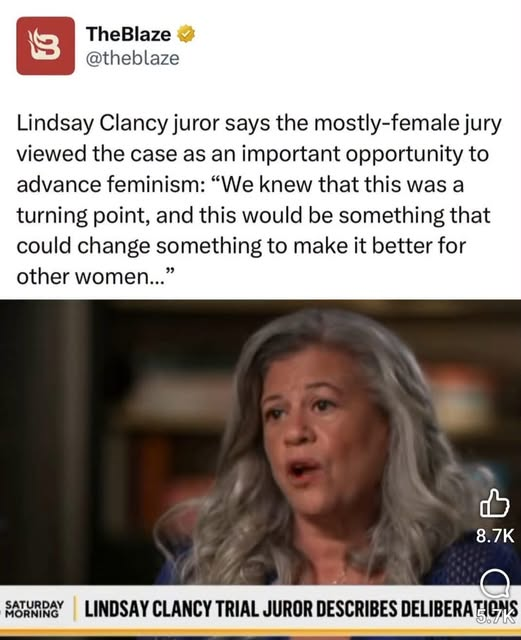
And in work, where the criteria layer has a name everyone knows: merit. An organization that hires and promotes by merit is running an adjudication — a procedure for determining, on evidence, who can do the work. It is imperfect, it is gameable, and it could never have been applied as cleanly as its defenders claim. But its premise is that competence is a fact about a person, discoverable by examination, and that the examination can be conducted by someone with no stake in the outcome.
Nix that premise and something has to fill the vacancy, because organizations must still decide whom to hire. If it is assumed that every standard encodes the interests of whoever wrote it — if the test, the credential, the interview, and the performance review are all instruments of the powerful — then applying them is not neutrality but the reproduction of an existing order, and correcting for that becomes the higher obligation. Over roughly a decade this reasoning was installed across American hiring, admissions, publishing, and promotion, and it was installed sincerely, by people who believed they were repairing an injustice rather than dismantling a criterion.
Notice what the substitution does to verification itself, which is the part that matters here. Merit is checkable against outcomes: an engineer’s bridge stands or falls. The replacement standards are not, because they are defined by representation rather than performance — and a standard that cannot be checked against results is a proxy in the precise sense described earlier, drifting from the thing it was meant to track at a rate nobody is measuring.
The consequences follow with grim predictability: Credentials awarded and then found unsupported. A university president resigning over citations after the question of her scholarship had been reclassified as a racist attack. A scholar’s meteoric rise unexamined for years because examination itself had become suspect. Two hundred and fifty million dollars spent on programs that a university’s own metrics found had worsened the outcomes they existed to improve. And, running underneath all of it, the counterfeiters — people who fabricated identities outright, which is what happens in any system where the thing being rewarded is easier to claim than to possess. A forged credential is a price signal. It tells you exactly what the institution is actually buying, and it’s not merit.
It cannot be said that Postmodernism destroyed any particular institution. What it did was teach two generations of the credentialed class — the people who would go on to staff the newsrooms, the HR departments, the accrediting bodies, and the schools — that truth claims as such are suspect, and that the appearance of objectivity is itself the strongest evidence of concealed interest. Ideas that stay in seminars are harmless. These ideas graduated, and the history of the 21st century follows them into the world.
This is part of a series of essays that examine the current epistemological crisis.
PART I: The Fauci Affair and Our Epistemological Crisis
PART II: A Theory of Epistemological Stasis and Crisis
PART III: How We Got Here: The Hollow Stasis
PART IV: The Long Dissolution
PART V: Childhood Vaccines: A Case Study in Epistemological Dissolution
PART VI: A Million Tiny Pieces: Descent into Epistemological Crisis
PART VII: The Postmodern Coup